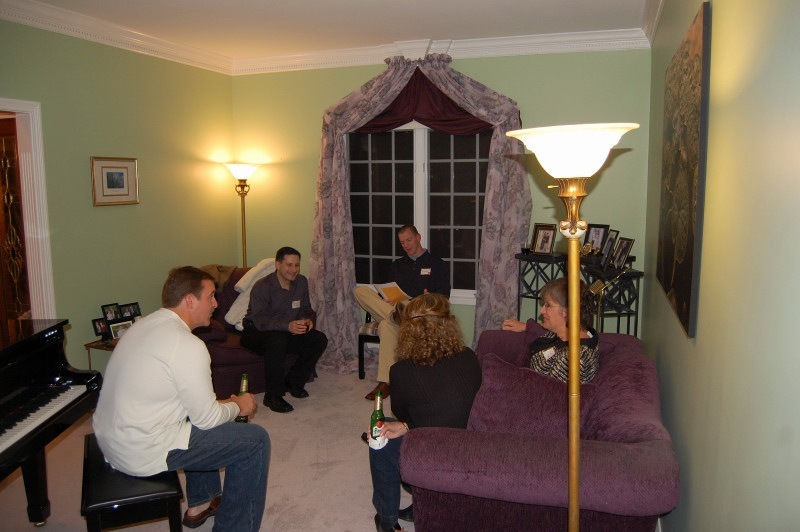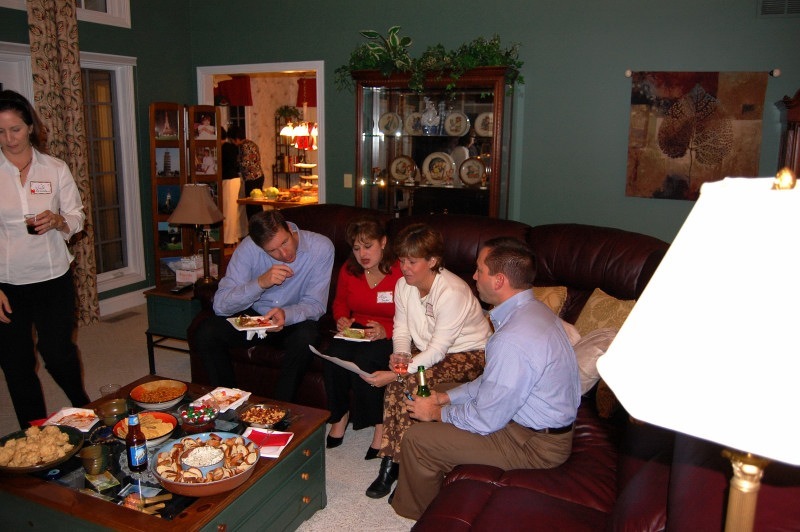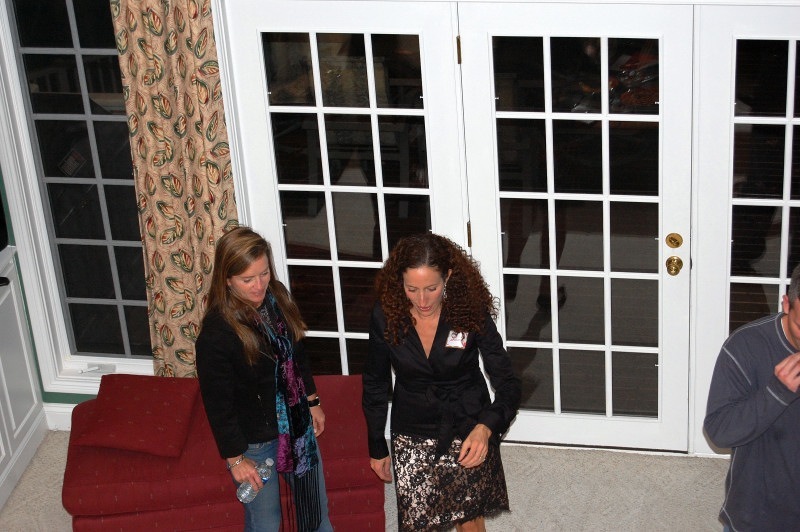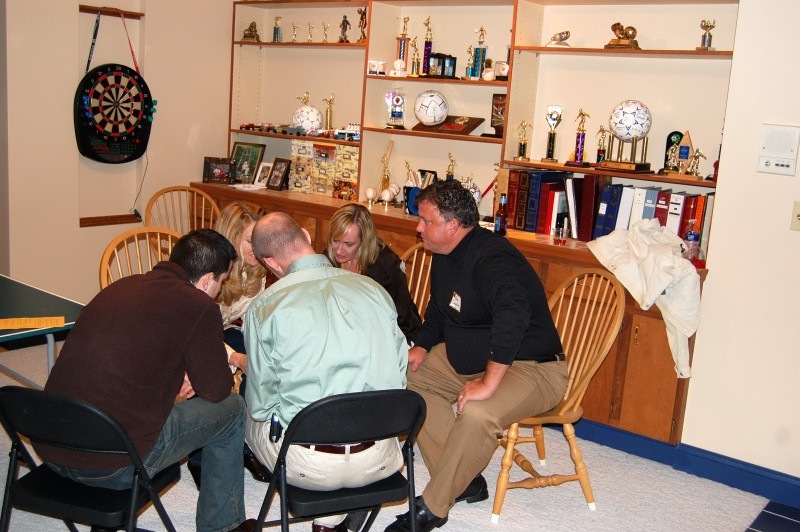
2012-2013 Wives Appreciation Night

February 21, 2013 under Events

20130209_216320130209_216620130209_216820130209_217120130209_217320130209_217620130209_217920130209_218320130209_218520130209_218920130209_219020130209_219420130209_219620130209_219920130209_220120130209_220520130209_220720130209_221120130209_221320130209_221620130209_222120130209_222320130209_222620130209_223020130209_223220130209_223920130209_2243

comments: Comments

Pictures from Bob Castellini

September 12, 2012 under Events

A few submitted pictures of Bob Castellini speaking.

20120907_06312420120907_063215Fathers 090712

comments: Comments tags:

Robert H. Castellini 10 Guiding Business Principles

September 12, 2012 under Meeting Materials


From Bob Castellini’s presentation about Faith, Family and Business Ethics:


Principle #1 Have a vision and communicate it

Principle #2 Surround yourself with good people and empower them

Principle #3 Bad partners make bad deals

Principle#4 Let others take the credit

Principle #5 It’s all about the customer

Principle #6 Reputation, reputation, reputation

Principle #7 Tell it like it is

Principle #8 Work smart

Principle #9 Litigation is taboo 99% of the time

Principle #10 Give back


In addition, here’s a copy of the Prayers of Saint Bridget

comments: Comments tags: , ,

What is the New Evangelization?

September 1, 2012 under Meeting Materials

The New Evangelization calls each of us to deepen our faith, believe in the Gospel message and go forth to proclaim the Gospel.  The focus of the New Evangelization calls all Catholics to be evangelized and then go forth to evangelize.  In a special way, the New Evangelization is focused on ‘re-proposing’ the Gospel to those who have experienced a crisis of faith.  Pope Benedict XVI called for the re-proposing of the Gospel “to those regions awaiting the first evangelization and to those regions where the roots of Christianity are deep but who have experienced a serious crisis of faith due to secularization.”  The New Evangelization invites each Catholic to renew their relationship with Jesus Christ and his Church.


 

Here’s the video from the presentation:


comments: Comments tags: ,

2012-2013 Syllabus

August 22, 2012 under Syllabus 2012-2013

The 2012-2013 Syllabus in PDF format:

2012-2013 Syllabus.pdf

comments: Comments

Empty Nesting – How do you deal with the children moving on?

August 22, 2012 under Syllabus 2012-2013

Summary

Have your children all gone off to college or moved away for a new career? Perhaps you’re a stay at home parent and you’re sending your last one off to all day school. Changes to the household can be a big change for a parent. You may be spending more time with just the two of you, or have a lot of time alone. How do you prepare yourself for these life changes?

Objective

A lot of the older fathers on the team have experienced or will soon experience an empty house from children going off to college or moving away for work. This can present some wonderful opportunities for you and your wife to get closer. It can also present an awkward silence in the house, bored spouse, and conflict. How do you prepare yourself for a different life-style when you’re so used to being a parent and all that it entails when children are around?

Fathers team has a lot of younger fathers as well, who may be bored by a session dominated by older fathers talking about something they’re far from relating to. However, younger fathers can experience the same issues when all of the children are finally off to school and a stay at home parent is alone for much of the day. Sometimes that’s a blessing! Sometimes that can present a change for one of the parents that we have to deal with.

Use this session to discuss both “empty nesting” and major changes at home related to these life changes.

Bible Readings

1. Matthew 19:13-15

Then children were brought to him that he might lay his hands on them and pray. The disciples rebuked them, but Jesus said, “Let the children come to me, and do not prevent them; for the kingdom of heaven belongs to such as these.” After he placed his hands on them, he went away.

2. Matthew 19:23-30

Then Jesus said to his disciples, “Amen, I say to you, it will be hard for one who is rich to enter the kingdom of heaven. Again I say to you, it is easier for a camel to pass through the eye of a needle than for one who is rich to enter the kingdom of God.” When the disciples heard this, they were greatly astonished and said, “Who then can be saved?” Jesus looked at them and said, “For human beings this is impossible, but for God all things are possible.” Then Peter said to him in reply, “We have given up everything and followed you. What will there be for us?” Jesus said to them, “Amen, I say to you that you who have followed me, in the new age, when the Son of Man is seated on his throne of glory, will yourselves sit on twelve thrones, judging the twelve tribes of Israel. And everyone who has given up houses or brothers or sisters or father or mother or children or lands for the sake of my name will receive a hundred times more, and will inherit eternal life. But many who are first will be last, and the last will be first.

3. Mark 10:6-9

But from the beginning of creation, ‘God made them male and female. For this reason a man shall leave his father and mother [and be joined to his wife], and the two shall become one flesh.’ So they are no longer two but one flesh. Therefore what God has joined together, no human being must separate.”

Catechism Readings

1. Paragraph 2223

Parents have the first responsibility for the education of their children. They bear witness to this responsibility first by creating a home where tenderness, forgiveness, respect, fidelity, and disinterested service are the rule. The home is well suited for education in the virtues. This requires an apprenticeship in self-denial, sound judgment, and self-mastery – the preconditions of all true freedom. Parents should teach their children to subordinate the “material and instinctual dimensions to interior and spiritual ones.”31 Parents have a grave responsibility to give good example to their children. By knowing how to acknowledge their own failings to their children, parents will be better able to guide and correct them:

He who loves his son will not spare the rod. . . . He who disciplines his son will profit by him.32

Fathers, do not provoke your children to anger, but bring them up in the discipline and instruction of the Lord.33

2. Paragraph 2230

When they become adults, children have the right and duty to choose their profession and state of life. They should assume their new responsibilities within a trusting relationship with their parents, willingly asking and receiving their advice and counsel. Parents should be careful not to exert pressure on their children either in the choice of a profession or in that of a spouse. This necessary restraint does not prevent them – quite the contrary from giving their children judicious advice, particularly when they are planning to start a family.

Small Group Questions

  1. Have you experienced an empty nest from children going off to college or moving away? How did you deal with it? Was it a positive or negative experience?
  2. Are you in touch with your wife enough to deal with family changes?
  3. Have you experience the last child off to all day school and the changes that brings?
  4. Are there other major changes in your family life that have led to you and your wife needing to adapt and grow?

Accountability

  1. If you have older children, start thinking about how you and your wife will deal with the changes.
  2. If you have a stay at home parent, how can you prepare for the last child off to all day school?

Author(s)

Dan Lape

Included Resources

http://www.mayoclinic.com/health/empty-nest-syndrome/MY01976/

Empty nest syndrome: Tips for coping

If your last child is all grown up and about to leave home — or he or she has already moved out — you might be experiencing some mixed emotions. Understand why empty nest syndrome happens and what you can do about it.

What’s empty nest syndrome and why do some parents experience it?

Empty nest syndrome isn’t a clinical diagnosis. Instead, empty nest syndrome is a phenomenon in which parents experience feelings of sadness and loss when the last child leaves home.

Although you might actively encourage your children to become independent, the experience of letting go can be painful. You might find it difficult to suddenly have no children at home who need your care. You might miss being a part of your children’s daily lives — as well as the constant companionship. You might also worry intensely about your children’s safety and whether they’ll be able to take care of themselves on their own. You might struggle with the transition if your last child leaves the nest a little earlier or later than you expected — or at a time different from when you did. If you have only one child or strongly identify with your role as parent, you might have a particularly difficult time adjusting to an empty nest.

What’s the impact of empty nest syndrome?

In the past, research suggested that parents dealing with empty nest syndrome experienced a profound sense of loss that might make them vulnerable to depression, alcoholism, identity crisis and marital conflicts.

However, recent studies suggest that an empty nest can also provide parents with many benefits. When the last child leaves home, parents have a new opportunity to reconnect with each other, improve the quality of their marriage and rekindle interests for which they previously might not have had time.

How can I cope with empty nest syndrome?

If you’re experiencing feelings of loss due to empty nest syndrome, take action. For example:

Accept the timing. Avoid comparing your child’s timetable to your own personal experience. Instead, focus on what you can do to help your child succeed when he or she does leave home.Keep in touch. You can continue to be close to your children even when you live apart. Make an effort to maintain regular contact through visits, phone calls, emails, texts or video chats. Seek support. If you’re having a difficult time dealing with an empty nest, lean on loved ones and other close contacts for support. Share your feelings. If you feel depressed, consult your doctor or a mental health provider. Stay positive. Thinking about the extra time and energy you might have to devote to your marriage or personal interests after your last child leaves home might help you adapt to this major life change.Can I prevent empty nest syndrome?

If your last child is about to leave home and you’re worried about empty nest syndrome, plan ahead. Look for new opportunities in your personal and professional life. Keeping busy or taking on new challenges at work or at home can help ease the sense of loss that your child’s departure might cause.

http://catdir.loc.gov/catdir/samples/wiley031/00009169.pdf

RESURVEYING EMPTY NEST ISSUES

Issues and problems in marriage cause you neither success nor failure; it’s how you deal with them that makes a difference, especially in the empty nest. When you are no longer meeting the demands of active parenting, issues will resurface and perhaps loom larger on the landscape of your marriage. So what are those major issues you’ll take with you into the empty nest?

Consider the top ten issues in an empty nest survey taken, number one being the most severe problem area, number two, the next most severe problem, and so on:

Top Issues in the Empty Nest Years

1. Conflict

2. Communication

3. Sex

4. Health

5. Fun

6. Recreation

7. Money

8. Aging parents

9. Retirement planning

10. Children

The top three issues in the empty nest-conflict, communication, and sex-are also among the major problem areas for younger couples. People take their issues along as they transition through the different seasons of a marriage. We observed no overall gender differences that were very strong. However, females tended to say communication was more of a problem than did males, and males tended to say that sex was more of a problem than females reported. (Are you surprised?)

At this stage of life, money issues are not rated as high as for younger couples, but health issues are rated higher. The fact that fun and recreation are rated so high indicates that perhaps couples are having trouble figuring out what to do together that’s enjoyable for both or finding fun things that both will take time out for. For years their shared recreational activities may have been centered around their children, and now they don’t know what to do to have fun together.

How would you rank these issues in your marriage? Think about your relationship: with which issues do you struggle the most?

comments: Comments tags: ,

Supporting Aging Parents

August 22, 2012 under Syllabus 2012-2013

Summary

As children, our parents made decisions for us, and provided us guidance. When we become adults and parents, our parents become peers and mentors as we raise our own family. As our parents reach old age, they begin to depend on us to give guidance, support, and understanding. This session seeks to explore issues that our parents may be experiencing, how we are engaged and affected, and share ideas and experiences of how to help our parents deal with the challenges, and enjoy their old age as best they can.

Objective

Growing old can be fun and it beats the alternative – early death. However as our parents grow old things change and can cause huge burdens on their daily lives. Perhaps a spouse has died and the remaining parent has to deal with loneliness, new challenges like balancing the checkbook when the other handled finances, or finding people that can relate to their stage in life.

Alternatively, perhaps both parents are still alive, but one requires care from sickness like surgery, Alzheimer’s, or just sedentary ways. It might be easy for us to ship them off to a retirement home and have others deal with them, or you might experience deep guilt in not being able to deal with a parent’s need without external help.

Could you take your father’s car keys away and tell him he can’t drive anymore? Could you tell your mother she has to move out of her home of 30 years or more because she can’t keep up?

How do you and your wife team up with family and friends to support your parents needs when they can’t handle everything they used to? Discuss ways to preserve your parent’s dignity while helping them through their aging and “Golden Years”.

Bible Readings

1. Matthew 25:31-40

“When the Son of Man comes in his glory, and all the angels with him, he will sit upon his glorious throne, and all the nations will be assembled before him. And he will separate them one from another, as a shepherd separates the sheep from the goats. He will place the sheep on his right and the goats on his left. Then the king will say to those on his right, ‘Come, you who are blessed by my Father. Inherit the kingdom prepared for you from the foundation of the world. For I was hungry and you gave me food, I was thirsty and you gave me drink, a stranger and you welcomed me, naked and you clothed me, ill and you cared for me, in prison and you visited me.’

Then the righteous will answer him and say, ‘Lord, when did we see you hungry and feed you, or thirsty and give you drink? When did we see you a stranger and welcome you, or naked and clothe you? When did we see you ill or in prison, and visit you?’ And the king will say to them in reply, ‘Amen, I say to you, whatever you did for one of these least brothers of mine, you did for me.’

2. Leviticus 19:32

Stand up in the presence of the aged, show respect for the old, and fear your God. I am the LORD.

3. Proverbs 10:1

A wise son gives his father joy, but a foolish son is a grief to his mother.

Catechism Readings

1. Paragraph 2251

Children owe their parents respect, gratitude, just obedience, and assistance. Filial respect fosters harmony in all of family life.

Small Group Questions

  1. Are you in a situation where your parents need your assistance: financially, daily care giving, illness recovery, disability? How do you help them?
  2. If your parents are younger, do you keep a close relationship to them so that later in life that closeness will keep you together?
  3. Did you or your family do anything proactively to help your parents?

Recommended Resources

  1. http://www.agingcare.com/
  2. ttp://elderhelpers.org/blog/ – blog with some interesting ideas
  3. http://money.usnews.com/money/blogs/the-best-life/2011/07/18/10-tips-for-caring-for-aging-parents – financial resources focused
  4. http://www.usatoday.com/news/health/2005-07-13-alzheimers-caregivers_x.htm

Accountability

  1. Make a family care giving plan today:
    http://foundation.aarp.org/Caregiving/?gclid=CI-c18m7mbECFQIQNAodmCWDhA
  2. Take a small step, make an effort to see your parents – or talk to them, more often. Don’t make it awkward when they really need you.
  3. Take the bigger step and ask your parents how they are doing and how you can help.

Author(s)

Dan Lape

Included Resources

Caring for elderly parents catches many unprepared.
http://www.usatoday.com/money/perfi/basics/story/2012-03-25/caring-for-an-elderly-parent-financially/53775004/1

Last July, Julie Baldocchi’s mother had a massive stroke and was paralyzed. Baldocchi suddenly had to become a family caregiver, something that she wasn’t prepared for.

“I was flying by the seat of my pants,” says Baldocchi, an employment specialist in San Francisco. Both of her parents are 83, and she knew her father couldn’t handle her mother’s care.

The hospital recommended putting her mother in a nursing home. Baldocchi wasn’t willing to do that. But moving her back into her parents’ home created other problems.

Baldocchi, 48, is married and lives about a mile away from her parents. She has a full-time job and has back problems that make it difficult for her to lift her mother. “I couldn’t do it all,” she says. “But I didn’t even know how to find help.”

With help from the Family Caregiver Alliance, she eventually hired a live-in caregiver. “But even if you plan intellectually and legally, you’re never ready for the emotional impact,” Baldocchi says. In the first two months after her mother’s stroke, she lost about 30 pounds as stress mounted.

More than 42 million Americans provide family caregiving for an adult who needs help with daily activities, according to a 2009 survey by the AARP. An additional 61.6 million provided at least some care during the year.

And many are unprepared.

Starting with the paperwork

While many parents lack an advance care directive, it’s the most basic and important step they can take. The directive includes several parts, including: a durable power of attorney, which gives someone legal authority to make financial decisions on another’s behalf; a health care proxy, which is similar to the power of attorney, except it allows someone to make decisions regarding medical treatment; and a living will that outlines instructions for end-of-life care. (For example, parents can say if they want to be kept alive by artificial measures.)

“It’s invaluable for the kids, because it’s hard to make those decisions for a parent,” says Jennifer Cona, an elder-law attorney at Genser Dubow Genser & Cona in Melville, N.Y.

An advance care directive is the first line of defense if a situation arises, says Kathleen Kelly, executive director of the Family Caregiver Alliance, which supports and educates caregivers.

Without an advance directive, the family will have to petition the court to be appointed the parent’s legal guardian, says AgingCare.com.

It’s important for families to talk about long-term care so the adult children know their parents’ preferences, wishes and goals, says Lynn Feinberg, a caregiving expert at AARP. But it’s not an easy conversation.

Elderly parents are sometimes suspicious of their children’s financial motives, says Susan John, a financial planner at Financial Focus in Wolfeboro, N.H. One client asked John to hold a family meeting because they needed an intermediary to talk about financial issues, she says.

And when there are many siblings, the family decisions can become a three-ring circus with much acrimony, says Ann-Margaret Carrozza, an elder-law attorney in Glen Cove, N.Y.

Families who need information and help sorting out disagreements can call on elder-law attorneys, financial planners, geriatric care managers and caregiver support groups. In February, AARP said it will offer its members a new caregiving support service through financial services firm Genworth.

Navigating the long-term care system

Many families are unprepared for quick decisions, especially when they find out that Medicare doesn’t pay for long-term care, Feinberg says.

The median cost of a year in a private room at a nursing home in 2011 was $77,745, according to Genworth. And only those who have spent most of their assets can qualify for Medicaid to pay for the nursing home.

Assisted living is another option. Residents can have their own apartment to maintain some independence. But the facilities generally provide personal care services, such as meals, housekeeping and assistance with activities.

Still, it’s not cheap: The national median cost in 2011 was $39,135, according to Genworth. Assisted living isn’t covered by Medicaid.

If they have a choice, at least 90% of elderly parents prefer to stay at home as long as they can, according to AARP research.

But if the parents can no longer safely live at home, it can be hard for children to move them into an adult care facility.

There may be another option. Sometimes the home can be modified so a parent can stay there. For example, Baldocchi put in a chair lift for her mother. She also arranged for a home caregiver.

The job of family caregivers

Family caregivers take over many responsibilities. One might manage a parent’s finances, while another sibling will take the parent to doctors’ appointments and shopping. Those who move in with a parent take on a significant and sustained burden of care.

Jan Walker moved into her mother’s home in Leesburg, Fla. After her mother, who is 83, had fallen, she wasn’t able to get around as well.

Walker, 55, has three brothers. But she is the only daughter, is divorced and has no children. “I always knew that this was the role that I would have, and I guess my mind was prepared for it,” says Walker, who now is a full-time caregiver and works from home as a tutorial instructor for a digital scrapbooking website.

“When you get into the trenches, it’s literally baptism by fire,” she says. “New things come up. It’s not just about advance planning for finances or medical care. It’s everything,” she says.

Caregivers need to also watch their own health. “There is such a thing as caregiver burnout,” Cona says. Among female caregivers 50 and older, 20% reported symptoms of depression, according to a 2010 study on working caregivers by MetLife.

“It’s a hard job,” Walker says. “But most worthwhile things are hard. She was always there for me when I needed a helping hand. It’s only natural that I be here for her now.”

Technology that can Help the Elderly

http://elderhelpers.org/blog/

Published July 13, 2012 | By elderhelpers

While a lot of technology can simplify seniors’ lives, it can also be intimidating to adopt for people growing up without the same technological innovations that we value today. Some technology gadgets for seniors are particularly popular such as:

Tablet PCs: Many technology companies like Microsoft, Apple and now Google have tablets out that have applications that seniors can enjoy like games, free limited newspaper access, internet surfing and videos.

E Readers: If the elder enjoys reading, but has difficulty seeing the text because of vision problems, E Readers are perfect for them. Some E Readers are designed for simplicity and have the ability to make the text any size so that vision is no longer a problem.

Wii: Video games systems like the Nintendo Wii give seniors the capability of enjoying the same sports that they did when it was safer for them to. The senior and their helper may enjoy activities like yoga, golf, tennis and bowling.

Cell Phones: For older seniors that still prefer the traditional land line telephone, think simple. There are many smartphones out that are unnecessarily complicated and can frustrate seniors when attempting to use them. Pay as you go phones are usually very simple, older models can be easier to use than the newer models.

It does not take very much training to use these devices; today’s technologically savvy youth may be able to give the seniors a thorough overview over any of these electronics. If you would like to find a volunteer to help seniors to use these devices, search for volunteers in your area and sign up.

comments: Comments tags: , ,

Religion in the Media

August 22, 2012 under Syllabus 2012-2013

Summary

Religion in the media… How is it portrayed? Do you think it is accurate? Are there any good places to get the truth in the media about religion? If so, where?

Objective

Scan your favorite newspaper or search your favorite news website on any given day and you will find news about religion. Turn on your TV or scan your radio and you will surely come across news and shows about religion. Is the message positive? Is it negative? Are the sound bytes we hear an accurate portrayal about religion this day in age? Are there good places to visit to get your daily dose of religion in the media?

Bible Readings

1. Philippians 4:8

Finally, brothers, whatever is true, whatever is honorable, whatever is just, whatever is pure, whatever is lovely, whatever is commendable, if there is any excellence, if there is anything worthy of praise, think about these things.

2. Luke 11:34

Your eye is the lamp of your body. When your eye is healthy, your whole body is full of light, but when it is bad, your body is full of darkness.

3. Psalm 101:3-4

I will not set before my eyes anything that is worthless. I hate the work of those who fall away; it shall not cling to me. A perverse heart shall be far from me; I will know nothing of evil.

4. James 3:5-11

So also the tongue is a small member, yet it boasts of great things. How great a forest is set ablaze by such a small fire! And the tongue is a fire, a world of unrighteousness. The tongue is set among our members, staining the whole body, setting on fire the entire course of life, and set on fire by hell. For every kind of beast and bird, of reptile and sea creature, can be tamed and has been tamed by mankind, but no human being can tame the tongue. It is a restless evil, full of deadly poison. With it we bless our Lord and Father, and with it we curse people who are made in the likeness of God. …

Catechism Readings

1. Paragraph 2494

The information provided by the media is at the service of the common good.285 Society has a right to information based on truth, freedom, justice, and solidarity:

The proper exercise of this right demands that the content of the communication be true and – within the limits set by justice and charity – complete. Further, it should be communicated honestly and properly. This means that in the gathering and in the publication of news, the moral law and the legitimate rights and dignity of man should be upheld.286

2. Paragraph 2497

By the very nature of their profession, journalists have an obligation to serve the truth and not offend against charity in disseminating information. They should strive to respect, with equal care, the nature of the facts and the limits of critical judgment concerning individuals. They should not stoop to defamation.

Small Group Questions

  1. What are you hearing about religion every day as you go about your life?
  2. What media outlets do you visit to get your media about religion?

Recommend Resources

  1. http://pewresearch.org/pubs/1905/religion-news-media-2010-islam-mosque-ground-zero
  2. http://www.huffingtonpost.com/2011/12/06/religion-stories-of-2011-_n_1131566.html
  3. http://www.usatoday.com/news/religion/index

Accountability

  1. This week try getting your news about religion in one of the places that the group suggested. Try it out and see if you like it.
comments: Comments tags: ,

Are you a Good Friend?

August 22, 2012 under Syllabus 2012-2013

Summary

Do you extend yourself to other men? How can you do a better job of serving the Men of the Parish or your workplace?

Objective

Jesus is the finest example of a true Christian friend. His love for us is sacrificial, never selfish. He demonstrated it not only through his miracles of healing, but more fully through the humble service of washing the disciples’ feet, and then ultimately when he laid down his life on the cross.

If we choose our friends based only on what they have to offer, we’ll rarely discover the blessings of a genuine friendship. Philippians 2:3 says, “Do nothing out of selfish ambition or vain conceit, but in humility consider others better than yourselves.” By valuing your friend’s needs above your own, you’ll be on your way to loving like Jesus. In the process, you’ll likely gain a true friend.

Bible Readings

1. Ecclesiastes 4: 9-12

Two are better than one: they get a good wage for their labor. If the one fails, the other will lift up his companion. Woe to the solitary man! For if he should fail , he has no one to lift him up. So also, if two sleep together, they keep each other warm. Where a lone man may be overcome, two together can resist. A three-ply cord is not easily broken.

2. John 15: 13-15

No one has greater love than this, to lay down one’s life for one’s friends. You are my friends if you do what I command you. I no longer call you slaves, because a slave does not know what his master is doing. I have called you friends , because I have told you everything I have heard from my Father.

Catechism Readings

1. Paragraph 2010

Since the initiative belongs to God in the order of grace, no one can merit the initial grace of forgiveness and justification, at the beginning of conversion. Moved by the Holy Spirit and by charity, we can then merit for ourselves and for others the graces needed for our sanctification, for the increase of grace and charity, and for the attainment of eternal life. Even temporal goods like health and friendship can be merited in accordance with God’s wisdom. These graces and goods are the object of Christian prayer. Prayer attends to the grace we need for meritorious actions. (1998)”Catechesis is an education in the faith of children, young people and adults which includes especially the teaching of Christian doctrine imparted, generally speaking, in an organic and systematic way, with a view to initiating the hearers into the fullness of Christian life.”

Small Group Questions

  1. How can I utilize my friendships made in the Father’s Team to become more Christlike?…
  2. What methods can I utilize this week to help me build up emotionally, spiritually & physically the Men of my small group?

Recommended Resources

  1. http://christianity.about.com/od/womensresources/a/christianfriends.htm
  2. http://christianity.about.com/od/lossanddying/a/vernesfriend.htm

Author(s)

Bob Considine

Included Resources

5 Traits of True Christian Friends
http://christianity.about.com/od/womensresources/a/christianfriends.htm

3 Types of Christian Friendships:

Mentor Friendship

The first form of Christian friendship Honeytree talked about was a mentor friendship. In a mentoring relationship we teach, counsel or disciple other Christian friends. This is a relationship based on ministry, similar to the kind Jesus had with his disciples.

Mentee Friendship

In a mentee friendship, we are the one being taught, counseled, or discipled. We are on the receiving end of ministry, being served by a mentor. This is similar to the way the disciples received from Jesus.

Mutual Friendship

Mutual friendships are not based on mentoring. Rather, in these situations the two individuals are usually more closely aligned on a spiritual level, balancing the natural flow of giving and receiving between genuine Christian friends. We’ll explore mutual friendships more closely, but first, it’s important to have a clear understanding of mentoring relationships, so we don’t get the two confused.

Mentoring friendships can easily become draining if both parties don’t recognize the nature of the relationship and construct appropriate boundaries. The mentor may need to pull back and take time for spiritual renewal. He may even have to say no at times, setting limits on his commitment to the mentee.

Likewise, a mentee who expects too much from his mentor is probably seeking a mutual bond with the wrong person. Mentees must respect boundaries and look for close friendship with someone other than a mentor.

We can be both mentor and mentee, but not with the same friend. We may know a mature believer who mentors us in God’s Word, while in turn, we take time to mentor a brand new follower of Christ.

Mutual friendships are quite different than mentoring friendships. These relationships don’t usually happen overnight. Typically, they develop over time as both friends progress in wisdom and spiritual maturity. A strong Christian friendship blossoms naturally when two friends grow together in faith, goodness, knowledge, and other godly graces.

5 Traits of True Christian Friends

So, what does a true Christian friendship look like? Let’s break it down into traits that are easy to identify.

Christian Friends Love Sacrificially

John 15:13
Greater love has no one than this, that he lay down his life for his friends. (NIV)

Jesus is the finest example of a true Christian friend. His love for us is sacrificial, never selfish. He demonstrated it not only through his miracles of healing, but more fully through the humble service of washing the disciples’ feet, and then ultimately, when he laid down his life on the cross.

If we choose our friends based only on what they have to offer, we’ll rarely discover the blessings of a genuine friendship. Philippians 2:3 says, “Do nothing out of selfish ambition or vain conceit, but in humility consider others better than yourselves.” By valuing your friend’s needs above your own, you’ll be on your way to loving like Jesus. In the process, you’ll likely gain a true friend.

Christian Friends Accept Unconditionally

Proverbs 17:17
A friend loves at all times, and a brother is born for adversity. (NIV)

We discover the best of friendships with brothers and sisters who know and accept our weaknesses and imperfections.

If we’re easily offended or hold on to bitterness, we’ll have a hard time making friends. No one is perfect. We all make mistakes now and then. If we take a truthful look at ourselves, we’ll admit that we bear some of the blame when things go wrong in a friendship. A good friend is quick to ask forgiveness and ready to be forgiving.

Christian Friends Trust Completely

Proverbs 18:24
A man of many companions may come to ruin, but there is a friend who sticks closer than a brother. (NIV)

This proverb reveals that a true Christian friend is trustworthy, indeed, but emphasizes a second important truth as well. We should only expect to share complete trust with a few loyal friends. Trusting too easily can lead to ruin, so be careful about putting your confidence in a mere companion. Over time our true Christian friends will prove their trustworthiness by sticking closer than a brother or sister.

Christian Friends Keep Healthy Boundaries

1 Corinthians 13:4
Love is patient, love is kind. It does not envy … (NIV)

If you feel smothered in a friendship, something is wrong. Likewise, if you feel used or abused, something is amiss. Recognizing what’s best for someone and giving that person space are signs of a healthy relationship. We should never let a friend come between us and our spouse. A true Christian friend will wisely avoid intruding and recognize your need to maintain other relationships.

Christian Friends Give Mutual Edification

Proverbs 27:6
Wounds from a friend can be trusted … (NIV)

True Christian friends will build each other up emotionally, spiritually, and physically. Friends like to be together simply because it feels good. We receive strength, encouragement, and love. We talk, we cry, we listen. But at times we also have to say the difficult things our dearest friend needs to hear. Yet, because of the shared trust and acceptance, we are the one person who can impact our friend’s heart, for we know how to deliver the hard message with truth and grace. I believe this is what Proverbs 27:17 means when it says, “As iron sharpens iron, so one man sharpens another.”

My hope is that these five traits will show you areas that may need a little work in your effort to build stronger friendships. But if you don’t have lots of close friends, don’t be too hard on yourself. Remember, true Christian friendships are rare treasures. They take time to nurture, but in the process we grow more Christlike.

Christian Friendships

Tribute to Friendship Poem

Friendship Bible Verses

Jesus Our Friend Devotional

comments: Comments tags:

Divorce – Is your marriage at risk?

August 20, 2012 under Syllabus 2012-2013

Summary

Divorce is a reality for almost 50% of all couples, is your marriage at risk? Do you know the warning signs, the key life changes that stress marriages, what can you do to assess and address your risk.

Objective

Divorce is a reality for many couples that forever change the lives of the husband, wife, children and all the extended family and friends. Catholics are not immune to this and divorce also creates an issue of being able to fully take part in all parts of the Catholic faith.

We have interviewed 4 Father’s Team men (all Catholic) who have either gone through, or are going through divorce now to get some idea of what were some of the potential issues, what the men wished they could have done differently, and what they would like to have heard 2-3 years before the divorce (from a Father’s Team Meeting) that would have helped them do more to preserve the marriage.

Some of the men realize that it was really the right thing for the couple to separate, and some thought they (and their spouse) could have done more to keep the marriage together.

However, some of things that we as a Father’s Team should discuss in this topic are:

  1. Communication – what kind of discussions are you having at home?
    1. Are your conversations only about discussing logistics of kid sports and ‘what goes on the shopping list’?
    2. Instead, can you name your wives 3 best friends and confidants?
    3. Do you know the dreams and aspirations of your wife?
    4. Are you telling your female co-workers more about your life then your wife?
  2. How did your marriage start?
    1. Some of the men realized (too late) that ‘maybe’ their wives got married for the wrong reason.
    2. Some women are running ‘away’ from a situation (i.e. home life) and not running ‘toward’ something (you). Realistically, it is too late for all of us to revisit this – but again getting back to communication – do you know enough the history of your marriage – have you talked about it?
    3. This is also a great topic to be talking to our kids who are considering marriage – can you coach your kids to really understand these dynamics?
  3. Life Stage impact on our marriage – are you paying attention?
    1. Some of the men interviewed started having issues – or were told their wives wanted a divorce – when the youngest child was going off to school full time.
    2. When the youngest is 7 years old, the couples were married from 15-20 years and all of a sudden the wife’s primary role as ‘mom’ was diminished – at the same time that the man is ‘hitting his stride’ from a career standpoint.
    3. Have you talked about ‘her’ role when the heavy lifting of child care slows down?
    4. Are you hitting your stride in your career, with lots of late nights, lots of travel, promotions, and business dinners? Are you missing a critical life stage opportunity to talk?

These questions should be a topic for the men of the Father’s Team and we should all examine the health of our marriage.

Some of the other ideas volunteered by the men (besides the topics above) were:

  1. Do you talk enough about meaningful things?
  2. Do you pray together?
  3. If you are having issues – have you addressed? Did you consider a priest, our deacons, marriage counseling?
  4. There are techniques that can be used to change the negative dynamics into positive communication – would you be interested in learning new techniques (one of our Father’s may be teaching this).
  5. One of the men said in hindsight he would have – cuddled more, talked more about his day and asked her about hers, really kiss her every day, more time with her and less with kids, ask for more feedback, learn to dance, tell her I am proud of her, smile more and savor her eyes.

Bible Readings

1. Ephesians 5:25-28

Husbands, love your wives, even as Christ loved the church and handed himself over for her to sanctify her, cleansing her by the bath of water with the word, that he might present to himself the church in splendor, without spot or wrinkle or any such thing, that she might be holy and without blemish. So [also] husbands should love their wives as their own bodies. He who loves his wife loves himself.

2. Dueteronmy 24:5

‘If a man is newly married, he must not join the army, nor must he be pestered at home; he must be left at home, free of all obligations for one year, to make his new wife happy.

Catechism Readings

1. Paragraph 2385

Divorce is immoral also because it introduces disorder into the family and into society. This disorder brings grave harm to the deserted spouse, to children traumatized by the separation of their parents and often torn between them, and because of its contagious effect which makes it truly a plague on society.

2. Paragraph 2386

It can happen that one of the spouses is the innocent victim of a divorce decreed by civil law; this spouse therefore has not contravened the moral law. There is a considerable difference between a spouse who has sincerely tried to be faithful to the sacrament of marriage and is unjustly abandoned, and one who through his own grave fault destroys a canonically valid marriage.

Small Group Questions

  1. Do you see yourself in any of the 3 situations mentioned?
  2. Have you considered a serious conversation – are you brave enough to address with your wife?
  3. Could your wife be asking you for a divorce tomorrow, next week? Would you see it coming?

Recommended Resources

  1. Pre-discussion with Rich DelCore and potentially engage some of the Father’s interviewed.

Accountability

  1. This week would be a good time to start….
    1. A discussion with your wife
    2. Examine your behaviors today

Author(s)

Rich DelCore

comments: Comments tags: ,